Advice And Resources For Healing After Abuse

One thing that I didn’t expect after leaving an abusive relationship was how intense the healing process would be.
Out of fear, I suppressed so many emotions and feelings throughout the relationship that when it came to learning how to move on, I had no idea where to even start. I felt like I had finally woken up from the worst nightmare of my life, yet at the same time, it was hard to process what I had been through and where I would go from there.
When we’re so used to how our lives and situations are, it’s almost like it becomes a part of us, whether we want it to or not. There was a lot that I blocked my brain from retaining at the time because my main goal was getting through each day, which left me hardly any time to process what happened.
It took me years to heal. I once described that time in my life as if a ton of bricks were sitting on top of my chest. But as the days went on and time passed, slowly those bricks started lifting one by one until I felt completely free from the pain that encompassed me. Everybody heals differently, but if you find yourself in the healing process, here’s some advice and resources that helped me heal and move on:
Disclaimer: Some links in this post might be affiliate links. If you purchase a product or service with the links provided, I may receive a small commission (with no extra cost to you!).
Give Yourself Permission To Feel
While there are different types of abuse, typically the partner being abused often suppresses their true feelings out of fear of retaliation or to maintain peace in the relationship.
After leaving the abusive relationship I was in, I realized I had suppressed my feelings for so long that I almost forgot how to feel. I was constantly told how I should or shouldn’t think and feel, and those words often replayed in my mind, causing me to feel completely numb to my emotions.
Being with somebody who drains you emotionally and/or physically, it can seem unnatural to immerse yourself in your feelings or give yourself permission to feel, especially when your brain has been wired to do the complete opposite. What helped me significantly was reminding myself that I was no longer in constant turmoil or drama, and that I wasn’t responsible for trying to ‘fix’ anyone else anymore, other than learning how to heal myself.
Allow yourself to feel it all. Whether it’s the emotions you’ve buried, the love that you haven’t been able to receive from other people, or soaking in the happiness that you finally feel as you inch closer to a better and brighter future.
Grieve As Much And As Often As You Need To
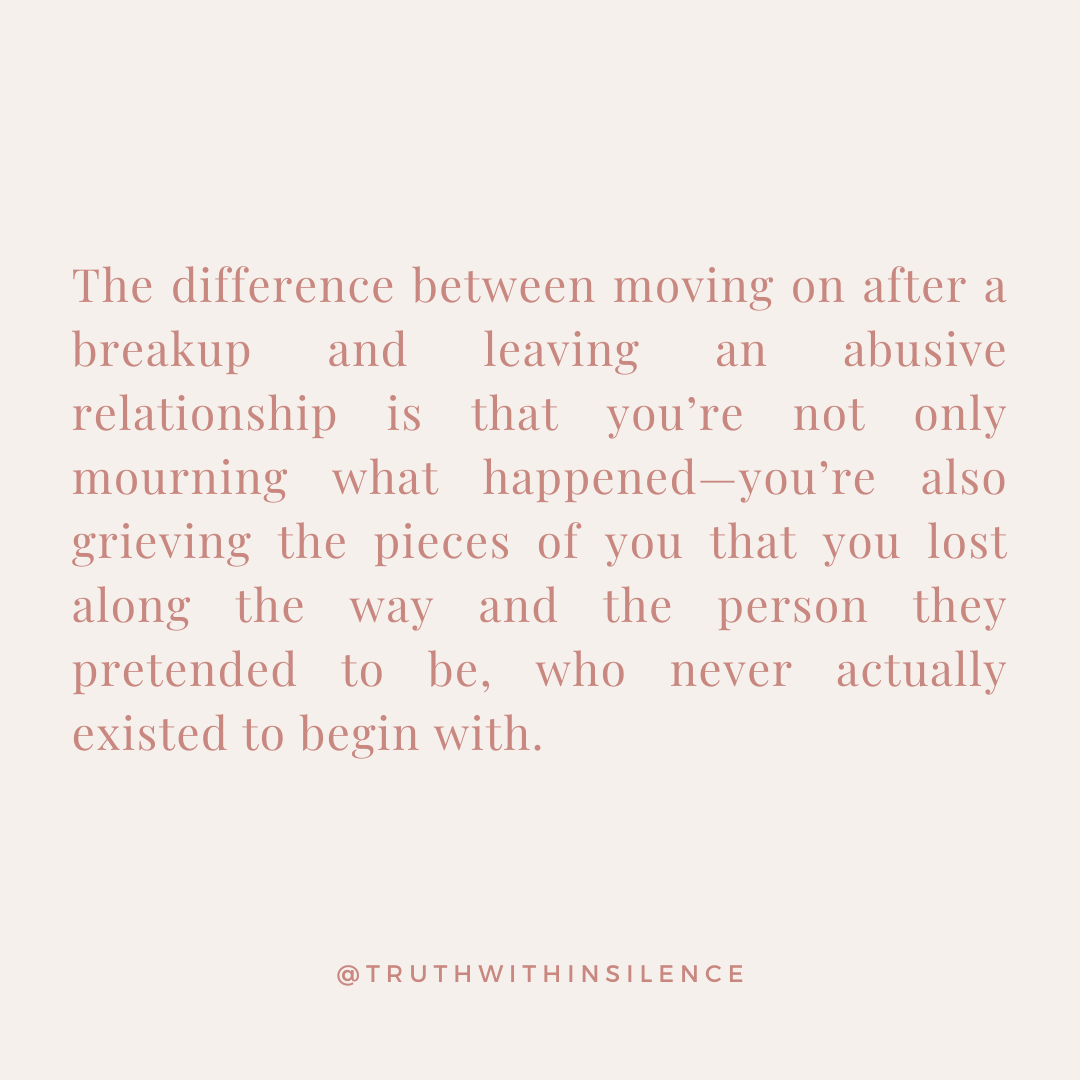
The difference between moving on after a breakup and leaving an abusive relationship is that it doesn’t feel like a ‘typical’ loss. You aren’t only mourning what happened; you’re also grieving the relationship you once envisioned and everything you lost along the way—including pieces of yourself and the person they pretended to be.
It’s okay to grieve the parts you felt like you lost, as well as the time and effort you invested into a relationship that never became what you thought it would, regardless of how hard you tried. After leaving the abusive relationship I was in, I vividly remember grieving all the time I felt was taken away from me: lost moments with family, friends, opportunities in college and work, and everything I gave up at one point or another because I thought I was ‘helping’ the relationship.
As you grieve, you might experience feelings of guilt or doubt, but it’s all part of the healing process. Your brain isn’t trying to hold onto what was, it’s trying to find a new normalcy, even when it hurts.
Cry it out, write it out, and simply sit with your feelings even if you’re unsure where they’ll lead you. There might be parts that you don’t want to confront, but it’s all essential to healing and moving on. Grieve as much and as often as you need. Healing doesn’t happen immediately, it happens over and over again until you can let go completely.
Educate Yourself As Much As Possible
Something that I learned about abuse is that if you’ve never been exposed to it (like I hadn’t been), then you aren’t aware of all the depths and layers that it consists of. I was completely blinded to the reality that abuse isn’t just physical, and even when it doesn’t check certain boxes, it doesn’t mean that it doesn’t fall under the category of abuse.
It wasn’t until the end of my abusive relationship that I began educating myself. Even though I’m not sure if I would’ve been ready for it at the time, it’s something that I wish I had done a lot sooner, because it opened my eyes to reality and gave me more clarity about my situation.
Here are some resources that helped immensely in understanding what I experienced and how to move forward:
1. The Power And Control Wheel
A co-worker and close friend of mine was the first to introduce me to the Power and Control Wheel after I started opening up to her about what I was going through. Created by the Domestic Abuse Intervention Project, the Power and Control Wheel illustrates the tactics abusers use to gain and maintain power and control over victims.
It was created to help show that abuse can take many forms, and it isn’t always physical violence. It opened my eyes to many aspects of my relationship that I was experiencing and helped me piece together my situation a lot more clearly. The picture below is the original picture that I took of the wheel, where I began highlighting everything relevant to my situation.

2. Book: Psychopath Free: Recovering From Emotionally Abusive Relationships With Narcissists, Sociopaths, and Other Toxic People By Jackson MacKenzie
Psychopath Free is a powerful book written by a survivor that focuses on healing and recognizing the signs of psychopaths, sociopaths, and narcissists in relationships. The author dives into the aftermath of manipulation and abuse and explores the emotional trauma that survivors face while offering practical guidance.
This was the first book I read during the end of the abusive relationship—and one that was an actual lifesaver for me. It unraveled the complex layers of abuse, helping me understand the true nature of psychopaths and sociopaths. It validated feelings I felt for so long, giving clarity on what I had endured.
3. Book: Why Does He Do That?: Inside The Minds Of Angry And Controlling Men by Lucy Bancroft
Why Does He Do That? explores the psychology behind abusive behavior and helps readers understand why people resort to manipulation tactics and control. She provides clarity and insight on how to identify red flags, the impact on victims, and the importance of healing. It also discusses alc0hol and dr*g usage, and was the first time that I felt validated in knowing that neither of these is a root cause for abusive behavior, it’s a choice made by the abuser and abuser only.
4. Book: Healing From Hidden Abuse: A Journey Through The Stages Of Recovery From Psychological Abuse by Shannon Thomas
Healing From Hidden Abuse focuses on breaking down the overlooked aspects of psychological and emotional abuse. It provides a comprehensive guide to help survivors understand and heal from the hidden effects of abuse and the stages of recovery. A powerful quote: “Psychological abuse leaves no bruises. There are no broken bones. There are no holes in the walls. The bruises, brokenness, and holes are held tightly within the target of abuse.” Thomas elaborates how just because there are no ‘visible’ signs of abuse, it doesn’t mean that the abuse isn’t real.
5. Book:
The Verbally Abusive Relationship is a book that breaks down what verbal abuse is to help you recognize manipulation, and how to respond to verbal abuse. It highlights subtle signs, explores the impact on survivors’ self-esteem, and offers strategies for setting boundaries and reclaiming your voice.
These books and resources were a major part of my recovery and healing process after abuse. It was the first time I started to feel validated and understood for everything I endured. I could identify how I felt, and it helped me unravel the complex layers of abuse. I also recommend workbooks and journals to help you process through the pain, emotions, and trauma that you’ve faced.
Spend Time With Those Who Love You Unconditionally
There was nothing that brought me more happiness after leaving that abusive relationship than spending time with those who truly loved me without conditions, especially since I had lost so much time with them.
Abusive relationships often keep you trapped, trying to control you by isolating you from anything that brings true happiness. This can look like not spending time with friends or family or not engaging in activities that bring you joy. There was so much I lost sight of throughout that relationship, but once it was over, I turned to the people who were there for me all along, even if I had unknowingly pushed them away because of my situation. It helped shift my focus off my situation, and redirected it in knowing that I never had to feel unsafe again; and that things were only going to get better from there on out.
Throughout my healing process, it also helped when I started opening up about my situation (even though it hurt) because I no longer felt an obligation or priority to protect the other person. I noticed the more I revealed, the heaviness lightened, and the easier it became to let go. You might feel a rollercoaster of emotions throughout the healing process, but as you surround yourself with the people who love you unconditionally, you’ll notice how much happiness is waiting for you.
Hold Onto Hope, Even Through The Pain
Hope can be hard to hold onto when we’re in the middle of the pain, but we find purpose in believing that our situation will always turn out for the best.
At the end of the relationship, I remember feeling completely at rock bottom, as if I couldn’t possibly sink any lower. My hope had pretty much disintegrated into nothing, and it wasn’t until after I left the relationship that I realized hope was something that I could’ve had all along.
Sometimes what feels like the most painful thing to happen to us at the time, ends up being the best thing that ever happened to us in the end because it guides us exactly where we need to be. Even through the pain, I chose to focus on faith, believing that one day all my suffering would lead to happiness on the other side.
We can’t always see how our circumstances will turn out, or what’s waiting for us in the future. But what I learned about healing after abuse was that my story was unfolding exactly how it was supposed to, even through the pain. I met the man that I was meant to spend the rest of my life with, and I’m now able to help women who are currently in or were in similar situations that I was in.
Always cling to hope when you’re unsure of the unknown, trust it to be your guidepost that’ll give you light even when you’re in the darkest of times. Your story is far from over, and there’s always hope even when it feels unattainable.
Healing after abuse can feel uncomfortable, hard, and messy, but it can also leave you feeling more liberated than you ever felt before, because you know you’re leaving behind a life that was never meant for you to begin with.
So if you’re in the healing process, never be afraid to sit with the heavy parts and feelings that you don’t know how to deal with yet. Spend time with the people who love you unconditionally, grieve when you need to, and educate yourself as much as possible. And when you’re ready, open up to those you trust. You never know how freeing it can be to share your story and how much it can end up healing you, after all.
If you or somebody you know is experiencing abuse, know that there are resources available to help. Visit the National Domestic Violence Hotline website here or contact them 24/7 at 1-800-799-7233 (SAFE).