30 Reflective Journal Prompts For The End Of The Year
This last year I found myself reflecting more than usual.
When I read my entry from last year around this time, I mentioned how crazy it is that we don’t realize how much change has happened in our lives until we look back and start reflecting. Between trying to navigate grief this year and find my new normal, I realized I feel the exact opposite now. If anything, I’ve been reflecting even more and trying to learn how to move forward while carrying the heaviness of this past year.
Time can feel fleeting. Yet at the same time, it can feel nearly impossible to keep up with. Moving through the days of this year felt long even though I’m finally standing near the end, where I wished to be all along. Hard times change us and shift our perspective in ways we could’ve never predicted. When we find ourselves in the middle of the storm so to speak, it’s hard to believe that things are still moving even when it appears we’re at a dead-end.
What time shows us is that things are always moving, even if they’re not moving at the pace we want or expect them to. Even if you found yourself not being where you wanted or expected to be throughout 2025, the end of the year gives us the best opportunity to pause and reflect. Not only on the experiences that changed and shaped us, but on how much we’ve grown and what we’re looking forward to in the new year.
Journaling can be a powerful tool for reflection, helping us make sense of the past year and envision what we’re hoping for in the future. Here are best practices for end of the year journal reflections, along with prompts to help guide your writing:
Disclaimer: Some links in this post might be affiliate links. If you purchase a product or service with the links provided, I may receive a small commission (with no extra cost to you!).
How To Use Journaling For End Of The Year Reflections:
Journaling can help us reflect on the past, the lessons we want to carry forward, and what we hope will change in the future. The new year offers us an opportunity for a ‘blank slate’, allowing us to set new intentions without letting the past year hold us back.
If you’re somebody who regularly journals, I suggest going back to your first entry in 2025 to see how far you’ve come since then. Even though I didn’t journal as much as I would’ve liked to this past year, it still helped me see how my progress has evolved, especially since there were times when I felt the farthest from it.

Helpful Practices For End Of The Year Reflections:
Review Key Moments:
Before diving into journal prompts, take a moment to think about your year as a whole, regardless of whether you journal regularly or not.
How would you describe your year overall? Reflect on moments you experienced happiness, challenges, personal growth, and the hard lessons you learned. You don’t need to assess every area (we’ll explore more of these in detail with journal prompts), but think about how you’ve changed, and what you’d still like to work on.
For example, at the beginning of the year for the first few months I felt overly burnt out and unmotivated. I was taking on too much at once without allowing my body and mind to rest, which caused me to lose sight of my goals. As the months passed, I learned the importance of self-care and how to prioritize my health, while loosening up on unrealistic expectations.
Identify Common Patterns:
Think about what your common patterns were: your habits, thoughts, and routines that guided you throughout the past year.
Are there any areas you need or want to improve (relationships, personal growth, work, etc.)? Or are you content with these areas and want to continue nurturing what you already have? Reflecting on patterns can help you assess your goals and intentions for the year ahead.
Set Intentions For The New Year:
Whether you have New Years resolutions or not, setting intentions for the year ahead is always important. Rather than setting unmanageable goals, be realistic about your intentions and what you can achieve.
Consider different areas of your life where you want to be more intentional. For example, if you want to be more intentional about working out, start small by committing to 30 minutes of exercise three days a week, until it gradually and naturally becomes a part of your weekly routine.
Additionally, when setting intentions, ask yourself what you want to achieve in the next year and how you can work toward those goals (you can even break them down by 3 month, 6 month, etc.). A daily planner can help you organize a weekly overview, set priorities, and track habits which makes it easier for you to stay on top of your goals and plan ahead.
Visualize Your Future:
Even though our lives rarely go according to our plan, it’s still important to envision what you want in your future, even if life ends up taking you down a different path.
I personally love the idea of writing a letter to your future self. Even if you don’t want to necessarily write a letter, write down what you hope life will look like one day. Assess different areas of your life such as your dream career, relationships, health, and personal growth.
One of the best parts about writing this down before you ‘have’ what you’re hoping for is being able to one day reflect and see how each piece aligned to come together in the end.
Related posts you might like:
- 12 Winter Self-Care Ideas To Help You Feel Your Best
- Benefits Of Journaling For Your Mental Health
- How To Effectively Manage Stress
Essential Tools For Reflective Journaling:
While you don’t need anything particular to start journaling, as somebody who’s journaled most of my life, here are a few of my favorite essentials that I’ve loved over the years:
Journals:
I use different journals depending on what I want to focus on. Sometimes I prefer a plain journal with lines, such as this aesthetically pleasing lined notebook, to help free-write without any distractions.
If you prefer prompts, I highly recommend a wellness journal to help you keep track of morning and evening check-ins, monthly reviews, and your intentions for setting goals.
Sticky notes:
I started using sticky notes at the end of my journal entries (such as the picture below). I usually like to pick out one or two sentences or quotes that came to my mind when I was writing and re-write them at the end for motivation, especially when looking back and reflecting.
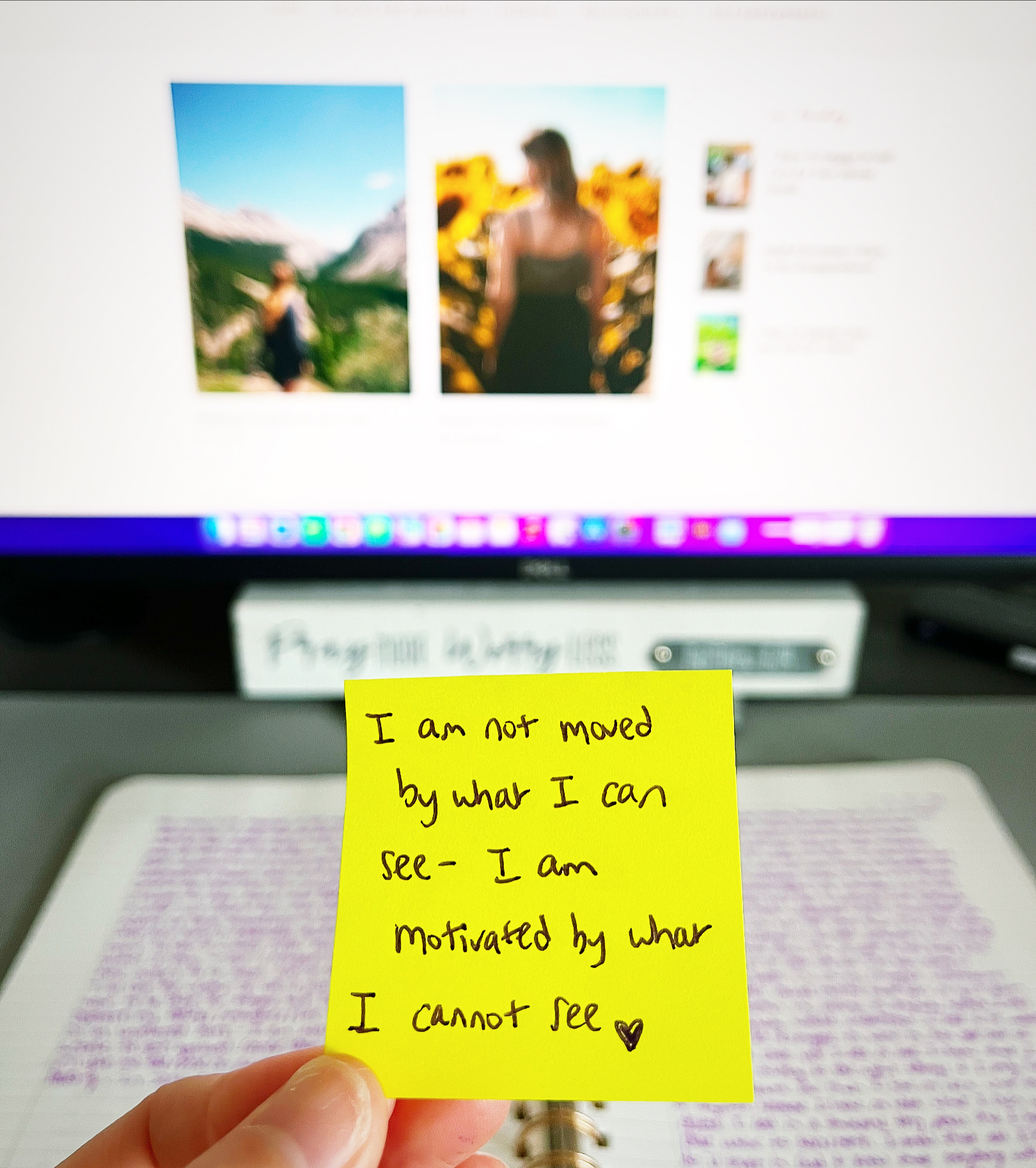
I also highly recommend page markers to help mark specific entries for reflections that you want to remember when flipping back and reading what you wrote.
Pens:
I’ve used many types of pens throughout the years, but my go-to and favorite ones by far are the retractable gel pens. I love how many different colors they come in, and usually switch up the color I use for each entry.
Something else that’s helped me a lot in journaling is highlighting important sentences or quotes that I want to remember. These have been my go-to highlighters, especially because I love the brighter colors.
Wireless Headphones:
I always need to listen to some type of music when I’m journaling, whether it’s a playlist or listening to a specific song that matches my mood. It usually depends on what I’m writing about, but I’ve found that music always enhances my creativity even more.
Apple AirPods have made such a difference in helping me focus and write without outside distraction, whether I’m journaling about personal reflections or brainstorming new ideas.
End Of The Year Journal Prompts:
Reflecting On The Past Year:
1. What moments stood out to you this year, and what left the biggest impact?
2. If you think about your year as a whole, what are three words you’d use to describe it?
3. Think about the experiences that pushed you to grow. How did you become a better version of yourself because of what you went through?
4. What were your habits and routines this past year? What ones do you want to carry over in the new year, and what ones do you want to let go of?
5. What did this past year teach you about yourself that you didn’t know before? How has it changed your outlook?
Personal Growth and Self-Worth:
6. How did you prioritize self-care this year? Is there any area you’d like to focus on more in the new year?
7. Think about how you’ve evolved over the past year from January until now. What’s something you’re most proud of?
8. What’s a limiting or negative belief that you want to let go of? How can you reframe it into something positive?
9. Reflect on how you stepped outside your comfort zone this past year. What did you learn from it?
10. What were your top priorities this year? What area do you want to work on most in the new year?
Want to save the full list for later? Sign up using the form below and receive the 30 reflective journal prompts right to your inbox!
Relationships:
11. How have your relationships with others changed over the past year?
12. Is there anybody you need to forgive, including yourself? How can you start the healing process?
13. Are there any relationships that drain you rather than fulfill you? Think about how you can start setting boundaries to protect your emotional peace.
14. Who brought you the most joy in the last year?
15. How can you invest more into the relationships in your life?
Emotional Wellness:
16. How did you feel about this past year emotionally?
17. List any fears or worries that you faced this past year, or any you’re currently working through.
18. Were there any situations that were completely out of your control? List ways you can give yourself grace to make it through the hard times.
19. What’s the biggest emotional challenge you faced? How did you overcome it?
20. Were there any emotions you repeatedly struggled with throughout the year? How can you start managing them better in the new year?
Goals and Habits:
21. What were your goals at the start of 2025? How did they evolve over the year?
22. What were you most proud of the past year? What’s something you wish would’ve been different?
23. Write down your goals for January. Under each goal, list 1-2 ways you can start working toward them.
24. What changes can you start making in your routine today that will help you for a better tomorrow?
25. What’s a habit you’re trying to improve?
Intentions For The New Year:
26. What area of your life do you want to focus on improving the most?
27. Choose a word to guide you throughout the year. Why did you choose this specific word and what does it mean to you?
28. What’s most important to you in the coming year?
29. How do you want to show up for yourself in the new year? What areas do you know you need to give yourself more grace in, if things turn out differently than you hoped?
30. What’s a lesson you learned from the past year that you want to carry with you in 2026?
As you reflect on these prompts, think about what’s most important to you and how you can start working toward it. Sometimes it’s not about an overhaul of all your habits, but about focusing on one area at a time.
Reflecting on the past year helps you recognize what intentions and routines you want to hold onto, what you want to let go of, and what you want to carry over in the new year. Remember that progress isn’t always about the big steps, but every little step that brings you closer to where you want to be.