
How To Take Care Of Your Mental Health When Feeling Drained

Showing up for yourself consistently when you’re drained can feel like a paradox.
It’s trying to navigate the thin line between wanting to be present so you can become a better version of yourself, vs. feeling forced to show up even though you don’t have the energy.
In the last few months, I experienced those conflicting feelings firsthand as I tried to get off a rollercoaster I never intended to be on. I wasn’t sure how to keep showing up for myself during one of the hardest seasons of my life, yet the bigger part of me wanted to keep pushing forward despite the pain I felt. I kept trying to convince myself that I should feel better than I actually did, which only ended up suppressing the truth of how I felt.
It wasn’t long before exhaustion took over and my mental health was at an all-time low. I knew there wasn’t much I could do except sit in the middle and find my grounding again, without forcing myself to feel a certain way.
When we face a hard time in our lives, we tend to forget that healing is a drawn-out process. At times, it can feel like we’re moving backward, yet beneath the surface we’re making more progress than we realize. If you’re feeling emotionally drained or overwhelmed, here are some ways to take care of your mental health with questions to guide you, even in the middle of pain:
Ask Yourself What You Need At The Moment
When we’re emotionally aware of how we feel, it becomes easier to give ourselves the time and space we need to work through our feelings.
Emotional awareness starts with figuring out why you feel the way you do, so you can reframe those thoughts to give yourself what you need. When I was in that hard place recently, I knew avoiding and suppressing my emotions would only bring me farther away from where I wanted to be.
Rather than trying to do too much at once, I started asking myself what I needed at that current moment. Sometimes my answer was as simple as rest, while other times it was more complex, such as asking for support from somebody I trusted.
Our mental and even physical health can suffer when we aren’t paying attention to what our body is asking for, especially in the middle of pain or feeling drained. Even on the days my mind was on overdrive, I asked myself how I could support and nourish what my body needed.
There were days when I felt like I couldn’t relax and shut my mind off, but I knew that spending 15 minutes journaling would help me release some of the pain, worry, or anxiety I was experiencing. It’s about finding what will make you feel even one percent better than you did before, even if it’s simple as drinking water or getting outside for a few minutes for some fresh air.
Take a moment and ask yourself what you need more or less of. It isn’t always about the major changes we make, but the smaller changes that end up making the biggest impact in the end.
Reflection Questions To Ask Yourself What You Need:
- Have I taken a moment to check in with myself lately? (Whether it was rest, nourishing food, movement, or even time outside)
- What can I do to support myself? Is there anything I can do differently to change how I feel?
- What should I do more or less of right now?
Release The Weight Of What You Can’t Control
When we fixate on a situation, we convince ourselves that if we think about it long enough, we might find a different solution or somehow change the outcome of what already happened.
Acceptance doesn’t always come easy, especially when we’re trying to make sense of why things happened the way they did. But sometimes there are no solid explanations, and overthinking it or replaying it in your mind over and over only brings more confusion rather than peace.
The more I tried to control the outcome of a situation, the further I ended up from where I actually wanted to be. I’ve learned through the hard moments and the times I couldn’t understand, that each day is a day closer to feeling better.
Instead of amplifying what already happened, ask yourself if there’s anything you can do differently to shift your perspective. Maybe it’s a thought or feeling you want to let go of, even if you aren’t sure how to yet. Bringing awareness to our deep-rooted feelings, whether it’s unraveling past hurt or unmet expectations, can help you recognize your emotions and start reframing them.
Letting go of what you can’t control doesn’t take away the depth of your pain, but it does help shift your energy from the problem to a more positive mindset.
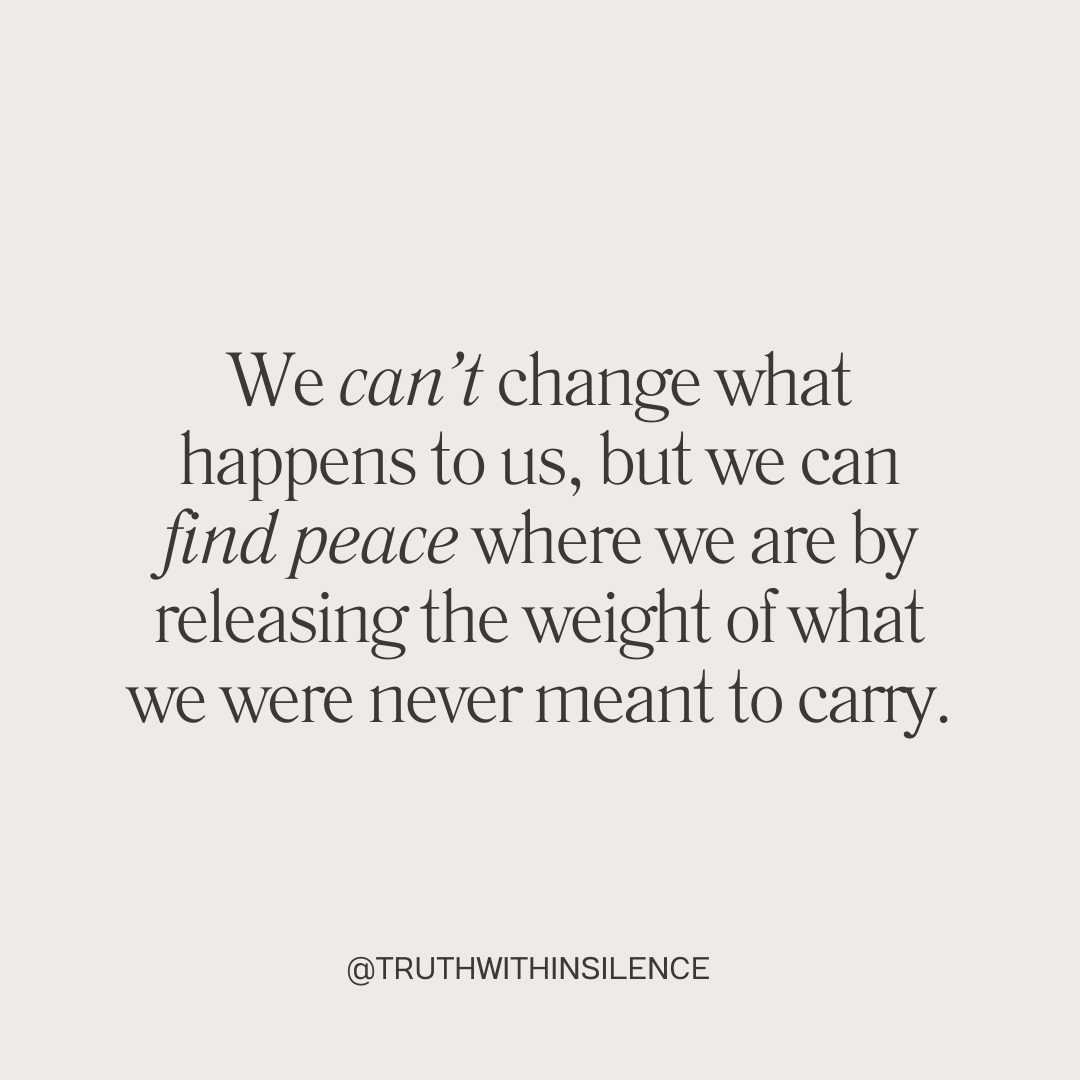
We can’t change what happens to us, but we can find peace where we are by releasing the weight of what we were never meant to carry.
Reflection Questions To Release What You Can’t Change:
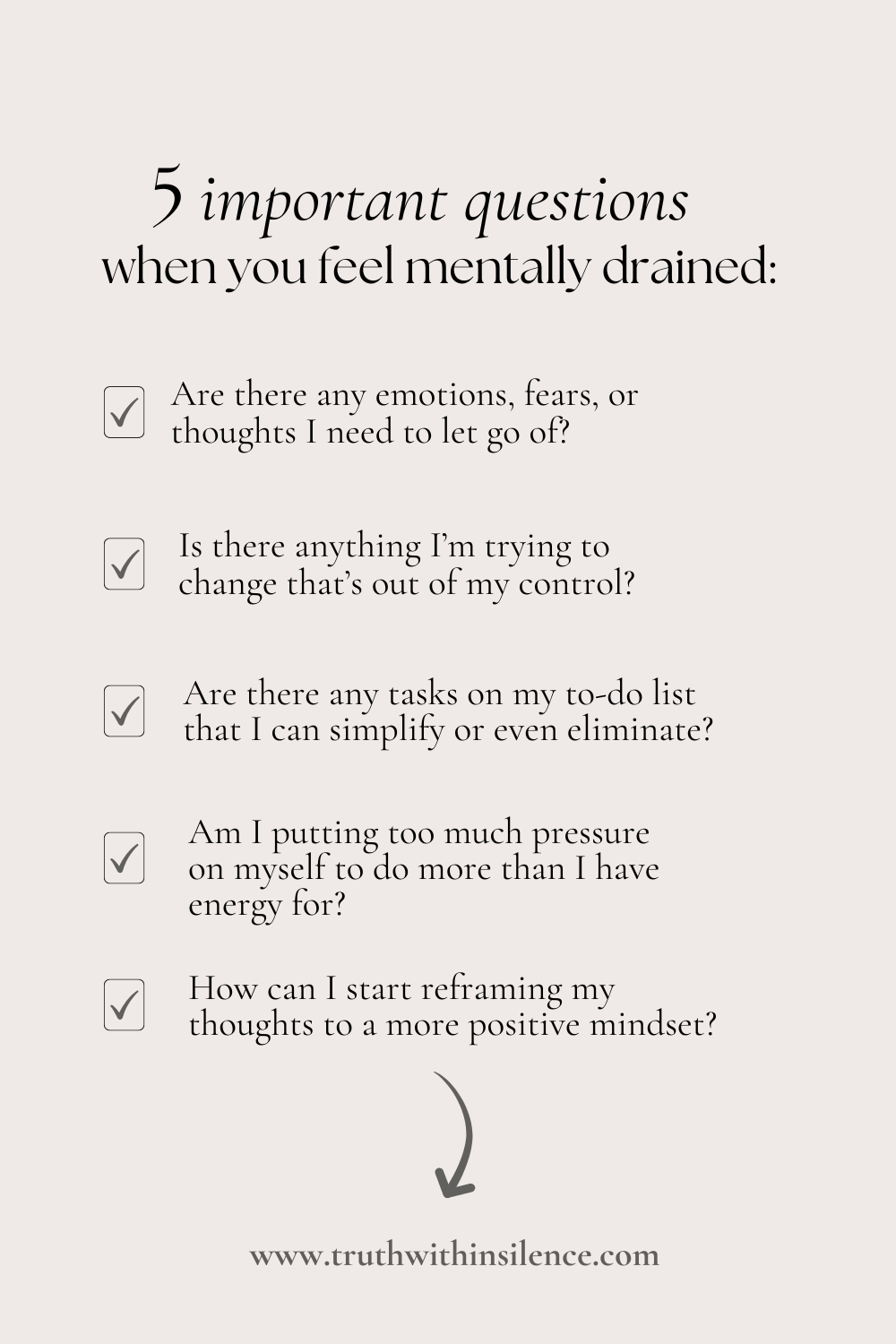
- Are there any emotions, fears, or thoughts I need to let go of?
- Am I trying to change something that’s out of my control?
- How can I start reframing my thoughts to a more positive mindset?
Simplify Your To-Do List And Your Mind
The last thing we want to do when you’re already at the point of burnout or mental exhaustion is think about adding one more thing to our to-do list.
I’ll be the first to admit that I’m not the most organized person, mainly because I’m not a planner. My mom used to always call me her “free spirit” when I was younger because I never had a single care in the world (which definitely came with pros and cons). But as I got older with more responsibilities, there were many times when I needed to have some type of organization because my tasks kept piling on top of each other.
If your to-do list feels like it’s draining you, ask yourself what can wait, what can be simplified, or even crossed off altogether.
Examples of how you can simplify your list include:
- Breaking larger tasks into smaller ones (ex. cleaning a part of your house one day, and tackling another area the next day)
- Prioritizing three main tasks to focus on instead of trying to do everything at once
- Writing out a physical checklist you can refer to when you feel overwhelmed
Sometimes, especially when we’re mentally drained, our minds tend to focus on everything at once instead of recognizing that it’s okay to slow down and tackle one task at a time. Your worth isn’t defined by how much you accomplish, it’s about making space for what’s most important to you.
Reflection Questions For Simplifying Your To-Do List:
- What’s one thing I can accomplish today without feeling overwhelmed?
- Are there any tasks on my to-do list that I can simplify or even eliminate?
- Am I putting too much pressure on myself to do more than I have energy for? (Remember that it’s okay to not operate at 100 percent all the time!)
Showing up for yourself at times can feel impossible when you’re at the point of burnout or feeling mentally drained. Taking a step forward in healing isn’t about rushing the process; it’s about giving yourself what you need at any given moment. Whether it’s listening to your body, releasing the weight of what you can’t change, or simplifying your to-do list, every small step is a step closer to where you’re meant to be.