
Setting Boundaries In Friendships

If there was one thing I used to struggle with the most in my relationships and friendships, it was learning how to set boundaries.
For the majority of my life, I was a people-pleaser, which caused me to constantly conform to what others wanted rather than putting my own needs first. Eventually, there came a point when I became so conditioned to accepting others’ behaviors that I couldn’t even clearly define what my own boundaries were.
After some of those relationships and friendships ended, I realized that setting boundaries with others isn’t selfish, it’s necessary—especially if it helps protect your mental health.
Setting boundaries in friendships, in particular, helps define what you will and won’t accept in your life. Rather than feeling disrespected or taken advantage of, boundaries create a healthy space for the relationship to grow, ensuring mutual respect and communication. If you find yourself struggling with setting boundaries in friendships, here are some helpful tips on where to start:
Assess How You Feel
Sometimes when we find ourselves in a friendship (or even a relationship) long-term, we become blinded to our true feelings.
Poor behavior becomes easy to accept because we might not even realize that we’re overlooking or ignoring boundaries that are important to us. Learning how to set boundaries in friendships starts with assessing how you feel.
A deep and genuine friendship is built on mutual respect, trust, and communication. Do you find yourself feeling like you’re constantly spreading yourself thin for the friendship, or that you’re always being taken advantage of?
When we aren’t aware of our emotions and feelings, it becomes hard to draw the line between how we truly feel and what we’re compromising for the sake of the relationship. You should never have to sacrifice your true feelings or conform to how somebody else thinks you should act just to ‘save’ the relationship.
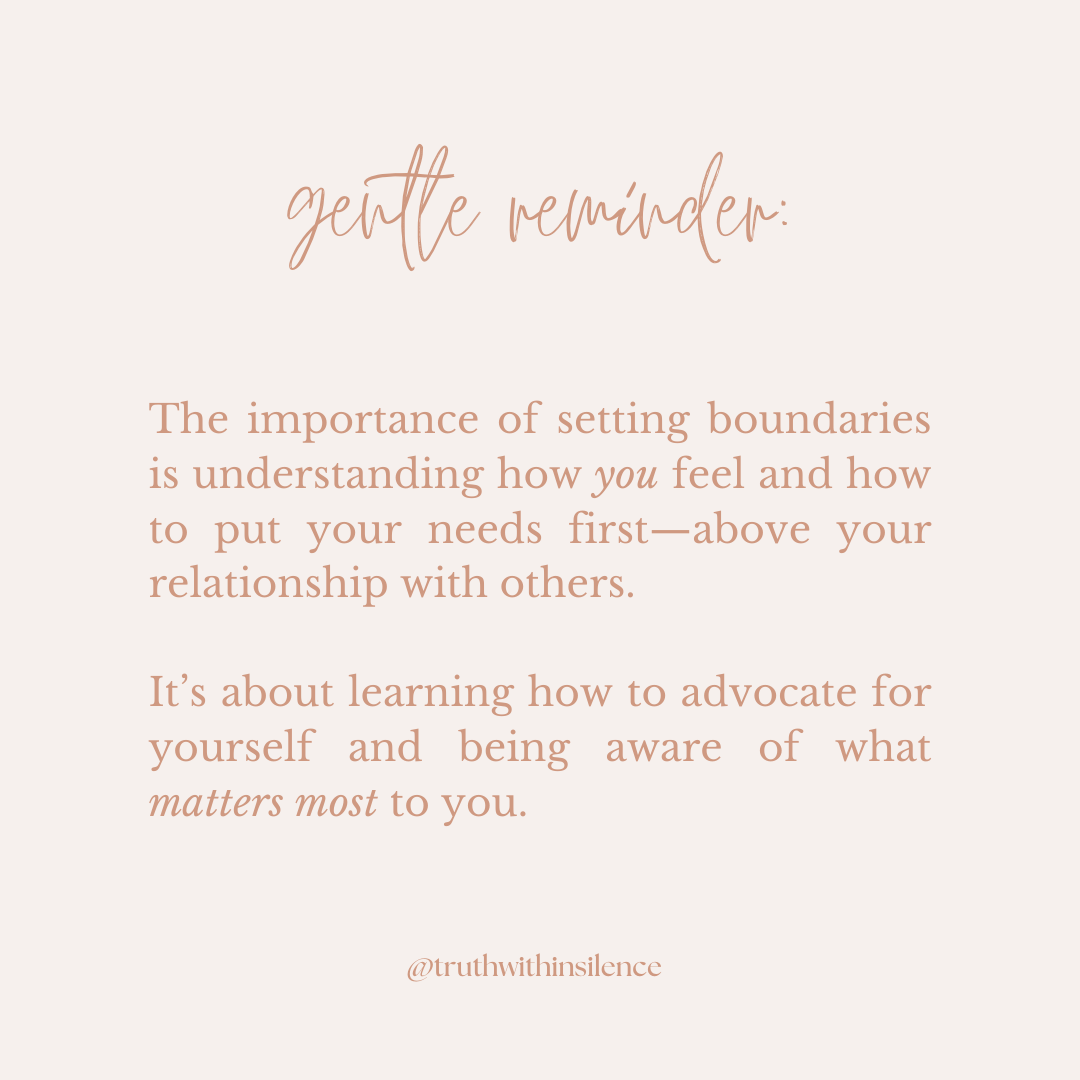
The importance of setting boundaries in friendships is understanding how you feel and how to put your needs first—above your relationship with others. It’s about learning how to advocate for yourself and being aware of what matters most to you.
Speak Your Truth
Once you’re able to assess how you truly feel, never be afraid to speak your truth and communicate your wants, needs, and even limits in a friendship. Learning how to speak up for yourself is one of the most powerful things you can do because it helps ensure that your voice is heard.
After I was silenced for so long, I realized the true importance of always speaking the truth about how we feel—even if it means potentially losing relationships. I used to hold back my true feelings to avoid conflict and out of fear of losing people I cared about, until I realized that suppressing our feelings only leads to bigger problems.
The people who truly love and respect you will never make you feel less of who you are for how you feel. Not everybody will always understand your viewpoint, but even if you have a difference of opinion, it doesn’t mean that it should come with overstepping or overlooking boundaries altogether.
Speaking your truth when it comes to setting boundaries in a friendship includes determining what behaviors you will vs. won’t tolerate. Part of working toward growth in a friendship is making sacrifices and commitments to avoid a lack of support, criticism, or disrespect.
Boundaries never mean that you don’t care about the other person, it means that you’re choosing to prioritize what’s most important to you.
Refuse To Feel Guilty For Establishing Boundaries
I used to struggle with feeling guilty about setting boundaries because I always wanted to keep the peace—which led me to apologize for how I felt.
While we can choose to have a positive outlook on a situation, we can’t change our emotions and how we feel. Our feelings are always valid, whether they align with what others’ expectations or what they think we should feel.
Setting boundaries in a friendship and expressing how you feel should be non-negotiable. When someone constantly dismisses or overlooks your boundaries, apologizing for expressing your feelings essentially tells them it’s okay to treat you however they see fit.
I never used to value my self-worth, and in turn, it harmed my mental health in the friendships and relationships I was in. I constantly found myself apologizing for feeling a certain way—not realizing this always caused more harm than good.
Reframing your approach to boundaries in friendships can make all the difference. For example, instead of saying: “I’m sorry, but this bothers me”, you could say: “This bothers me, and I’d like to talk to you about it.”
When you learn how to express your feelings and refuse to apologize for how you feel, your expectations become clear and known. Setting boundaries will never make you lose a true friendship or relationship. You aren’t responsible for pleasing others, but you are responsible for learning how to put yourself first.
Re-Evaluate The Friendship
After you’ve clearly stated your boundaries, if you are questioning whether your friend is still disrespecting or ignoring your feelings, it might be time to re-evaluate your friendship.
If a friend makes you feel hesitant to share your true feelings out of fear of repercussions—whether that’s anger, guilt, or being dismissed—it’s worth asking whether this relationship is truly serving you anymore.
Re-evaluating a friendship doesn’t necessarily mean that the friendship has to end, it’s more so to help you recognize if your boundaries are being respected or overlooked.
Helpful questions to ask yourself when it comes to evaluating a friendship can be:
- How do I feel after spending time with this person?
- Do they lift me up or bring me down?
- Am I always the one compromising, or is there mutual respect?
- Do I feel comfortable being truly honest with how I feel?
- Does this friendship help or hinder my growth?
- Do my boundaries feel respected or dismissed?
True friends will always want to grow with you, not away from you. Sometimes your friend might not even realize how you feel until you express it, especially if they’re used to a lack of boundaries. Taking a step back to assess your friendship can help you determine if it’s worth fixing or whether it’s time to move on altogether.

Boundaries help us establish what is and isn’t important to us in our lives. If you find yourself in a friendship that consistently overlooks or dismisses your boundaries, never be afraid to speak up about how you truly feel.
Setting boundaries doesn’t make you selfish, and it doesn’t mean that you don’t care—if anything, setting boundaries shows that you value yourself and your mental health above anything else.