
How To Connect With Yourself When Feeling Overwhelmed

The other day, I told my husband how I felt like I finally reached my breaking point.
It wasn’t one specific thing that led me to that feeling, but rather, the overwhelming weight of carrying everything from the last couple of months.
The amount of stress I was holding onto felt impossible to release. When we experience traumatic situations, especially when they happen one after another, our minds instinctively seek safety and protection. I found myself unknowingly holding my breath for what came next, and at the same time, I desperately tried to remind myself of a simple truth: the danger had passed, and it was okay for my body to calm down now.
Yet, it seemed like my mind and body weren’t on the same page. While I’ve actively been putting my mental health first and noticing what triggers those feelings, my body was still playing catch-up. I’d find myself waking up in the middle of the night with my thoughts racing, analyzing the choices I recently made and thinking about if any of these situations ever happened again, how I could be more prepared in the future.
We aren’t meant to live on high alert or in constant survival mode. When I realized my body was experiencing this, I could feel it slipping into burnout. I knew the only solution was learning how I could lessen the heaviness and manage those feelings.
Seasons in our lives will inevitably feel overwhelming. But instead of avoiding the pain, the best thing we can do is learn how to work through it. If you’ve been feeling weighed down or overwhelmed, here are some helpful ways to manage it and reconnect with yourself:
Allow Yourself To Pause (Without Guilt)
- Taking a moment to breathe. Pausing means temporarily disconnecting so you can identify where your stress is coming from and why it keeps building up. You’re never behind when you take time for yourself. But you can get behind when you try to pile on too much at once. It’s okay to rest without guilt.
- Find what makes you feel grounded and connected. Maybe it’s journaling and writing your thoughts out loud to release the heavy weight off your chest, walking outside without distraction, or confiding in a friend you trust.
Only you know what will help you feel better, but it’s important to set aside time to pause and step outside your situation.
Sit With How You Feel
We’d rather avoid than feel. I know I’ve been guilty of it more times than I can count. But when we ignore what our body is trying to tell us, our pain only becomes amplified and further deep-rooted.
After losing our twins and my mom having a scary ICU stay at the hospital this past year, the last thing I wanted to do was unravel my emotions. The first half of the year, I was dealing with deep grief, and once I learned how to carry that forward with me, I was then faced with making split-second and life-altering decisions for one of the most important people in my life.
But when we notice and can pinpoint why we feel the way we do, and allow ourselves to feel that way, we learn how to take a step forward. Even if that means learning how to rewire our thoughts, reminding ourselves of our safety, and working through the heavy feelings one at a time.
Just because a situation is over, it doesn’t mean your feelings about the situation are over. And that’s an important distinction. Sitting with how you feel means working through the overwhelm when you’re ready, and not a moment sooner. Because if we don’t get to the root of our pain, it only buries deeper, before we have time to process it.
Identify What Your Triggers Are
A trigger is anything that unexpectedly brings us back to a situation that once caused us stress, anxiety, or extreme overwhelm. Even when the danger is no longer there, it’s our body’s way of remembering what happened and trying to protect us from it happening all over again.
When we cycle through one traumatic event after another, our nervous system doesn’t know how to reset right away. A part of reconnecting with yourself when feeling overwhelmed is learning what your triggers are, and how you can actively work through them to lessen the anxious thoughts, even if it feels never-ending.
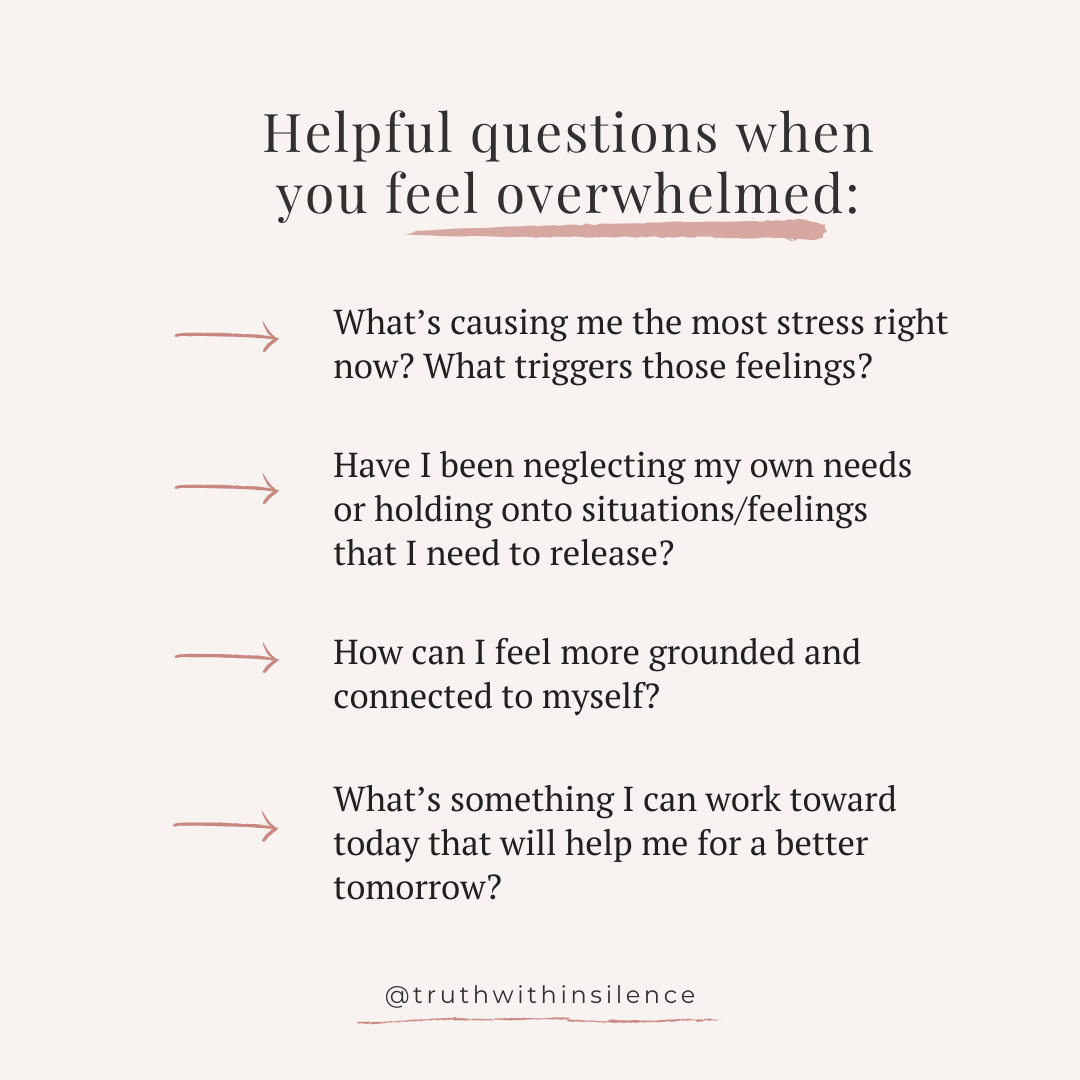
With everything I went through this last year, I found myself stepping away from social media more often than not. It felt counterproductive since I’m constantly trying to push my website out more and more, but I knew it was necessary since it started negatively impacting my mental health. If you feel overwhelmed and are having trouble determining what your triggers are, take a moment to ask yourself:
- What’s causing me the most stress right now? What is something that I’ve noticed will trigger that stress?
- Have I been neglecting my own needs, or holding onto situations/feelings that I need to release?
- How can I feel more grounded and connected to myself?
- What’s something I can work toward today, that will help me for a better tomorrow?
Once we can start identifying where our feelings are stemming from, it becomes easier to learn how to manage and deal with them in the future. Recognizing what triggers you and makes you feel overwhelmed helps you work through what you need to face, rather than avoiding it altogether.
Focus On What You Can Control
The moments that we feel the most uncertain in our lives often ends up giving us more clarity in the end. If we only focus on what’s out of our control, we start to feel overwhelmed when we can’t alter our circumstances to what we want to see happen.
This past year I had to learn how to accept and deal with situations that I didn’t have any control over. Nothing I could’ve done different would’ve changed the outcome or the end result. Sometimes the hardest part is learning how to focus on what we can control (such as our attitude and perspective), which requires letting go of what we can’t change.
Reconnecting with yourself when you’re feeling overwhelmed requires you to step outside your situation, rather than looking through the narrow lens of what you’re facing. When we’re in a situation that feels impossible to get out of, especially when things aren’t changing day after day, it’s easy to focus on everything that’s going wrong instead of looking at what’s going right.
Your situation might not change right away, and sometimes it can feel like you’re in the middle for an eternity. But the truth is, your situation and circumstances can feel more manageable when you start releasing the weight of everything you can’t control to embrace everything you can.
For example, you can control the way you respond to stress, how you spend your time and the small, meaningful ways you choose to care for yourself even in the midst of uncertainty. We can’t change others’ behaviors or avoid the hard times in our lives, but we can make minor adjustments by noticing our thoughts and choosing to make changes so we feel less overwhelmed.
Put Yourself First
When everything feels overwhelming, it’s hard to remember that it’s okay to put yourself first.
I’ve struggled with people-pleasing for most of my life. While I’ve learned the importance of setting boundaries, it’s something I still have to work through at times. For me, it often stemmed from the fear of disappointing people I care about. But sometimes putting yourself first means doing what’s best for you no matter how it looks to anybody else.
Putting yourself first can look like saying no to others so that you can say yes to what you need. Maybe that looks like rearranging your plans, taking a moment to pause before responding or setting aside time for self-care activites that recharge you mentally or physically. My mental health significantly improved after I made small changes such as putting my happiness first, investing in healthy relationships and letting go of anything that no longer served me.
When you learn how to put yourself first, you’re setting non-negotiables for what makes you feel the best without reaching the point of complete overwhelm.
Related posts you might like:
- 5 Mindset Shifts That’ll Change The Way You Think
- Important Things To Let Go Of To Become Your Best Self
- 7 Simple Self-Care Habits To Help You Feel Like Yourself
Rest As Much As You Need
We tend to put too much pressure on ourselves when we aren’t reaching our expectations, because we think that it means we aren’t doing our best or living up to our true potential.
There’s always an unnecessary amount of pressure to be productive constantly, but sometimes what your body and mind need the most is to rest and be present where you are.
Resting allows us to heal. It intentionally forces us to slow down so we can create space for what we need. Just because something has felt right for you in the past doesn’t mean it’s what you need now. Different seasons demand different versions of us, and how you feel one day can look different from the next.
Rest is productive when you’re overwhelmed because it reminds your body that slowing down is okay, and necessary. It’s saying that you don’t have to be ‘on’ all the time to feel like you’re making progress, and it’s proving that where you are right now is enough.
There will always be things that need to be done, but putting yourself first should take priority when it comes to managing overwhelm and reconnecting with who you are.
Surround Yourself With The Right People
When we’re deep in a situation, it’s hard realize the impact that the people around us have. Ask yourself honestly: do the people in your life add to your stress or help take it away?
The right people will always encourage, support, and uplift you, especially when you’re feeling overwhelmed. It’s not always about them knowing the right thing to say but rather, it’s about them being there for you unconditionally especially when you need somebody to lean on.
The people you spend time with should never make you feel unheard, invalidated, or more stressed out. That doesn’t always mean cutting people off completely, but sometimes it means temporarily disconnecting from those who aren’t aligning with your needs. Relationships that continue draining your energy will only leave you feeling more overwhelmed or exhausted in the end.
Prioritize relationships with people who respect your feelings, listen without judgment, and show up consistently rather than when it’s convenient for them. The support you need might come in deep conversations or it might be as simple as having somebody who understands where you’re coming from, so you can release some of the heavy feelings that have been consistently weighing you down.

When we put off dealing with the feelings of being overwhelmed, it only causes us more pain and stress. Confronting our innermost and deepest emotions may not always be comfortable, but it’s always necessary if we want to change how we feel.
Remember: it’s okay to take things one step at a time, and if something feels too heavy, you never have to carry it alone.