
5 Small Changes to Help Transform Your Mental Health

There were so many times throughout my life when I thought: “If I could just figure this one thing out, then I’ll be able to let it go and trust where my path is taking me.”
I was always the type of person who was afraid to make a wrong decision that I wouldn’t make any decision. I kept overthinking where I was at in life, rather than trusting that I was where I was meant to be.
Since I struggled with learning how to lean into life changes, I became increasingly anxious thinking about all the decisions I had to make and how it would affect my future. In turn, the anxiety bled into other areas of my life, eventually causing my mental health to go into a downward spiral quicker than I could process it.
A lot of the time, when we can’t see how a situation will play out, we tend to overthink our situation, which takes away from where we’re at.
As we go through different life stages and changes, it usually always demands a different version of us. The person that I was even three years ago is different from the person I am today. The core of who I am is still the same—but my perspective, mindset, and general outlook have changed.
Something I learned quickly through all those life transitions and changes is how important it is to prioritize my mental health.
Mental health affects the way we think and feel, including how we make decisions. When we ignore or neglect our mental health, it can lead to anxiety, depression, and an overall disconnect from who we are.
Prioritizing our physical, emotional, and mental health starts with awareness of how we’re feeling. If we’re able to confront how we feel, it’ll help us figure out a way to work through it rather than suppress and ignore it.
Sometimes the biggest and most profound changes in our lives start with the smaller changes we make in our daily lives. Here are 5 small changes you can make to help transform your mental health:
Disclaimer: Some links in this post might be affiliate links. If you purchase a product or service with the links provided, I may receive a small commission (with no extra cost to you!).
1. Be True To Your Wants And Needs
I’ll be the first to admit that I spent the majority of my life always trying to please other people. If somebody didn’t agree with how I felt, I would conform to what they wanted to keep the peace and avoid confrontation.
But essentially all that did was take away from being authentically true to my wants and needs. It caused me to have unresolved feelings from situations I didn’t know how to heal or move on from because I was too afraid to speak up about how I truly felt.
We never have to agree to something if we don’t actually agree with it—and we should never feel like we have to say yes to something just to make somebody else happy.
It’s not to say that we shouldn’t care about others’ emotions and feelings, but if it’s causing our mental health to decline, then we may need to rethink some of those choices and decisions.
I’ve been in situations before where I’ve overcommitted, which left me feeling stretched thin in multiple areas. We can’t be at our best if we’re always trying to be present everywhere, all the time. Sometimes that looks like saying no even when it feels uncomfortable or inconvenient.
It’s hard learning how to be true to your wants and needs when you’ve always done the opposite, but when you learn how to stand up for yourself, then you won’t be afraid to say no when it’s what your mental health needs.
The people who truly love and care for you will always respect your decisions and choices, even when they can’t necessarily understand them. They’ll know your happiness is what’s most important and would never expect you to put anything else above that.
2. Practice Forgiveness
I wrote an entire article on practicing forgiveness. This topic is especially important to me because I spent years learning how to forgive and move past what happpened.
What I struggled with the most was figuring out how to forgive someone who had profoundly hurt me and showed no remorse. This caused me to avoid digging into the healing process because I felt like if I practiced forgiveness, it would be saying that what happened was okay; as if it never happened to begin with.
But what I learned throughout that process was actually the opposite: we forgive not for others, but for ourselves.
Learning how to forgive helps you become more established in who you are, your values, and what you will and won’t stand for. I never realized how much holding onto unforgiveness was affecting my mental health, until I started learning how to let go.
We hold onto the things that we don’t know how to release, but when we ignore our pain, it only suppresses it even longer.
Holding onto unforgiveness keeps us stuck in the past, and affects our lives more than we realize. Whether we need to practice forgiveness for ourselves (a regret or mistake that we can’t seem to get over), or towards others (trying to forgive somebody who deeply hurt us), it’s essential for our emotional and mental health.
For me, forgiveness was something I needed to practice daily. I didn’t just suddenly wake up one day and forgive the person who deeply hurt me.
It was something that, each day, I started learning how to let go little by little, until I could let go completely.
Practice forgiveness for yourself; because once you learn how to let go, you’ll never look back.

3. Recognize What You’re Grateful For
Our mental health can feel like a rollercoaster, especially since our emotions and feelings can vary from day to day, depending on what we’re going through in our lives.
While I was working on that process of forgiveness, I was fighting a battle with myself every day. I was trying to look for the light in my situation, yet felt like I was wandering around in the dark with no real sense of direction.
When we choose to recognize what we’re grateful for, it usually makes those hard times a tad bit easier. We might not be happy with our current circumstances, but it doesn’t mean we can’t choose to focus on what does bring us happiness.
There was a long period of time after I began healing from the toxic relationship I was in when happiness felt so distant. Instead of focusing on what I didn’t have, I looked at everything I did have: a warm house, a college degree that I worked so hard to complete, and people in my life who never made me feel anything less than loved.
If we choose to focus on even one thing a day that we’re grateful for each day, we’ll realize how much we do have, rather than fixating on what we don’t have.
When I was able to shift my perspective, I realized that just because I didn’t have everything, didn’t mean that I didn’t have anything.
Whether you use a gratitude journal or make a mental note, recognizing at least one thing you’re grateful for daily can help increase your overall mood. It’ll help you find gratitude even in the moments when you might not feel it right away.
4. Clarify What Needs Priority In Your Life
What things need to be a priority in your life, or what’s something that’s non-negotiable for you?
Over the years and through different experiences, something that became non-negotiable to me is setting boundaries.
Just as I mentioned being a people-pleaser, what came along with that was struggling to learn how to set boundaries with people. I often had no sense of boundaries because I allowed people to treat me how they saw fit, rather than being assertive about how I felt.
Our time is invaluable, and not everything always needs or deserves our attention. One thing that helped me invest in myself for my mental health was determining what was a priority in my life.
Putting others’ needs above my own didn’t need priority, but figuring out what contributed to my happiness did.
Decide what’s most important to you and what adds to your mental health, rather than what harms it. Some things should be non-negotiable, especially anything that diminishes your feelings or emotions.
5. Invest In Healthy Relationships
We all have most likely heard the saying that you become like the people who you surround yourself with the most.
When I was in an unhealthy relationship, I found myself in such a negative thought process. I started conforming to what the other person wanted and believed, rather than sticking by my morals and values and what I knew to be true.
Holding onto unhealthy relationships or even habits can alter who we are, and in turn, affect our mental health. Looking back, I know that my mental health was at its absolute lowest because I let the pattern of unhealthiness keep repeating itself over and over.
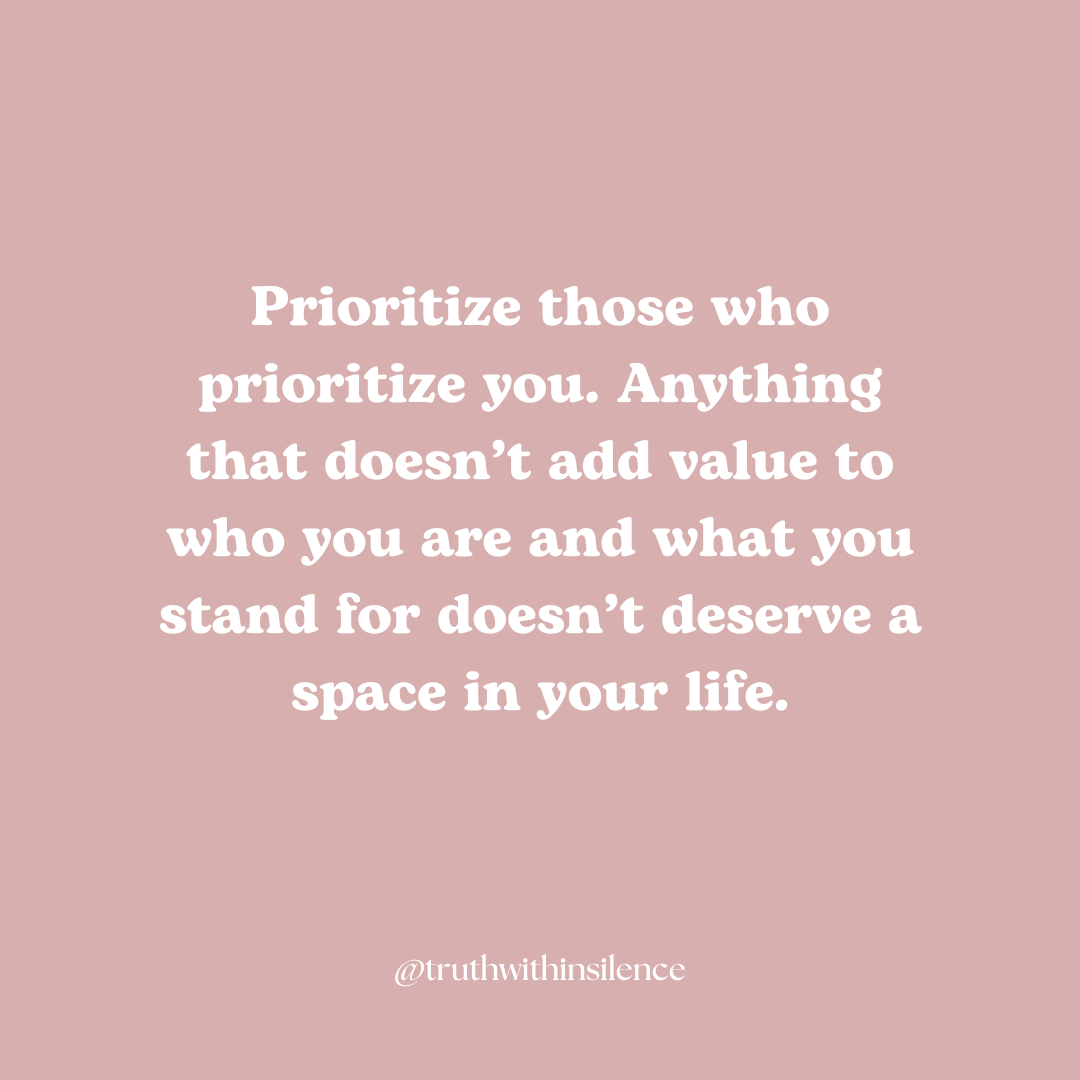
When we stay in a situation longer than we’re supposed to, our mental health can suffer as a result. But anything that doesn’t add value to who you are, doesn’t deserve a space in your life.
Invest in the relationships and habits that make you more of yourself, not less. We sacrifice too much when we conform to what other people want, rather than investing in the things that bring out the best in us.
If you’re having trouble letting go of somebody or something that you know isn’t adding value to your life, remember that not everybody you meet along your journey is meant to stay.
Sometimes people are only meant to be there for a short period of time, to teach us more about ourselves or help us grow. Know your value and never invest in a relationship that doesn’t make you feel appreciated or loved.
It’s not always the biggest changes that have the most profound impact on who we are, but rather all the small changes we make along the way.
Your mental health should always be the top priority, especially because one area can affect several others.
If we’re willing to confront how we feel, it can help us work through it and start making changes. It might be a process that we have to go through day in and day out, but your mental health is always worth it. Even if it’s one step at a time.